The balance  : Non-functional tchotchkes collecting dust and cluttering up floorspace and surfaces?
 Souvenirs and heirlooms that
personalize a house
and make it feel like home?
Souvenirs and heirlooms that
personalize a house
and make it feel like home? 
 My solution for this conundrum has been to
intentionally use wall space to display sentimental items!
My solution for this conundrum has been to
intentionally use wall space to display sentimental items! 
Jump ahead to read about how it is okay to update your gallery over time, the hanging process, and categories of memoribilia that work as wall art.
 Full disclosure: This blog post is more for me than anyone else.
Evolution of Our Gallery Wall
Iteration 1
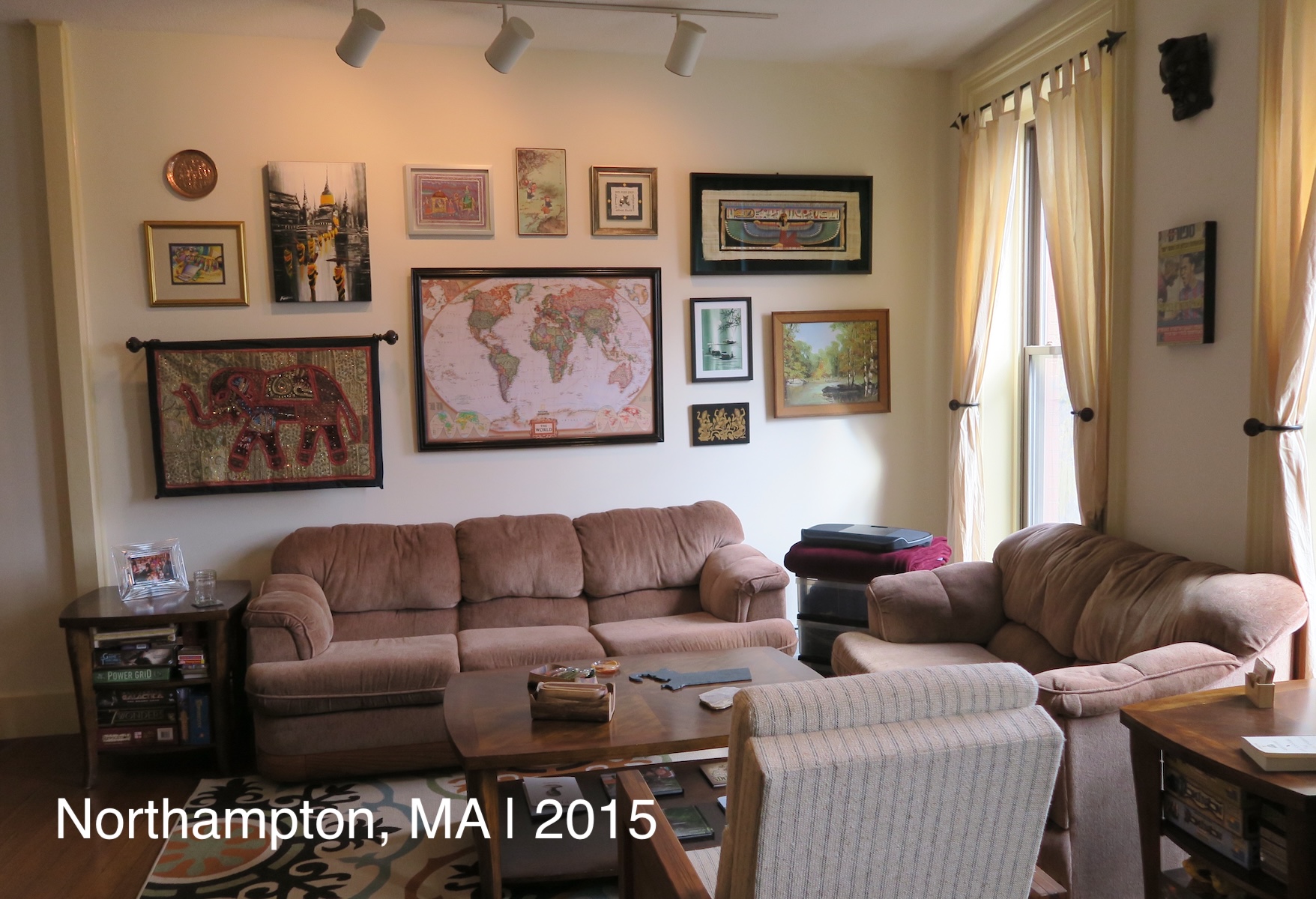
When my husband and I moved in together after getting married 
 , we had to combine
two households’ worth of sentimental wall art into far fewer walls.
, we had to combine
two households’ worth of sentimental wall art into far fewer walls.  Here’s how (some of) it came together in a
gallery wall in our first apartment in Northampton, MA.
Here’s how (some of) it came together in a
gallery wall in our first apartment in Northampton, MA. 
Iteration 2
I repeated the process when we moved into our tiny
Cambridgeport
apartment in 2018. Can you spy the updates I made?
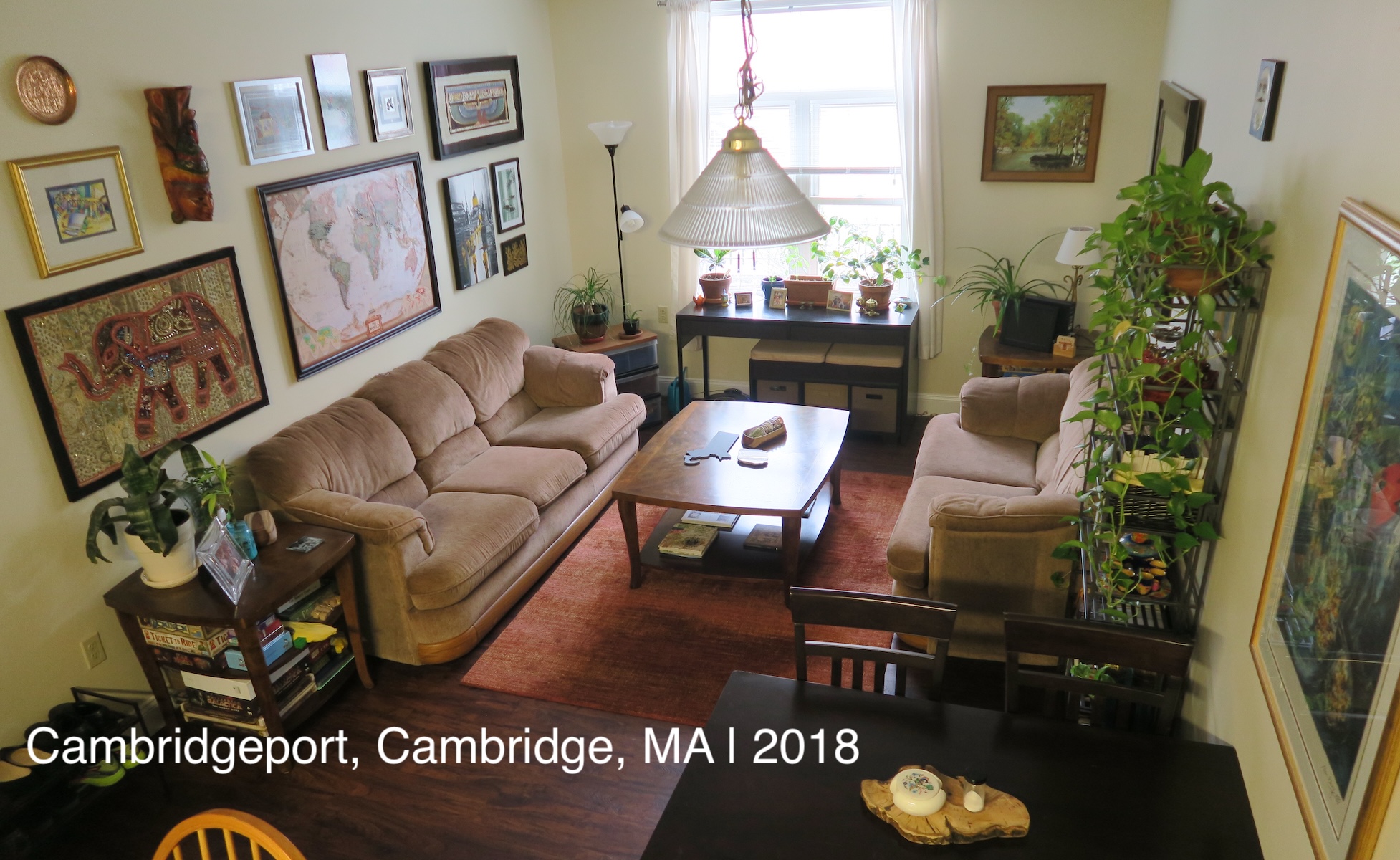
 The Sri Lankan prosperity mask was a new addition,
and I stretched the elephant tapestry onto a DIYed wooden
frame (instead of a curtain rod).
The Sri Lankan prosperity mask was a new addition,
and I stretched the elephant tapestry onto a DIYed wooden
frame (instead of a curtain rod).
Iteration 3
And finally! Here is the gallery wall in our current condo! Hanging
all this over the staircase while keeping our necks intact was… not guaranteed… 

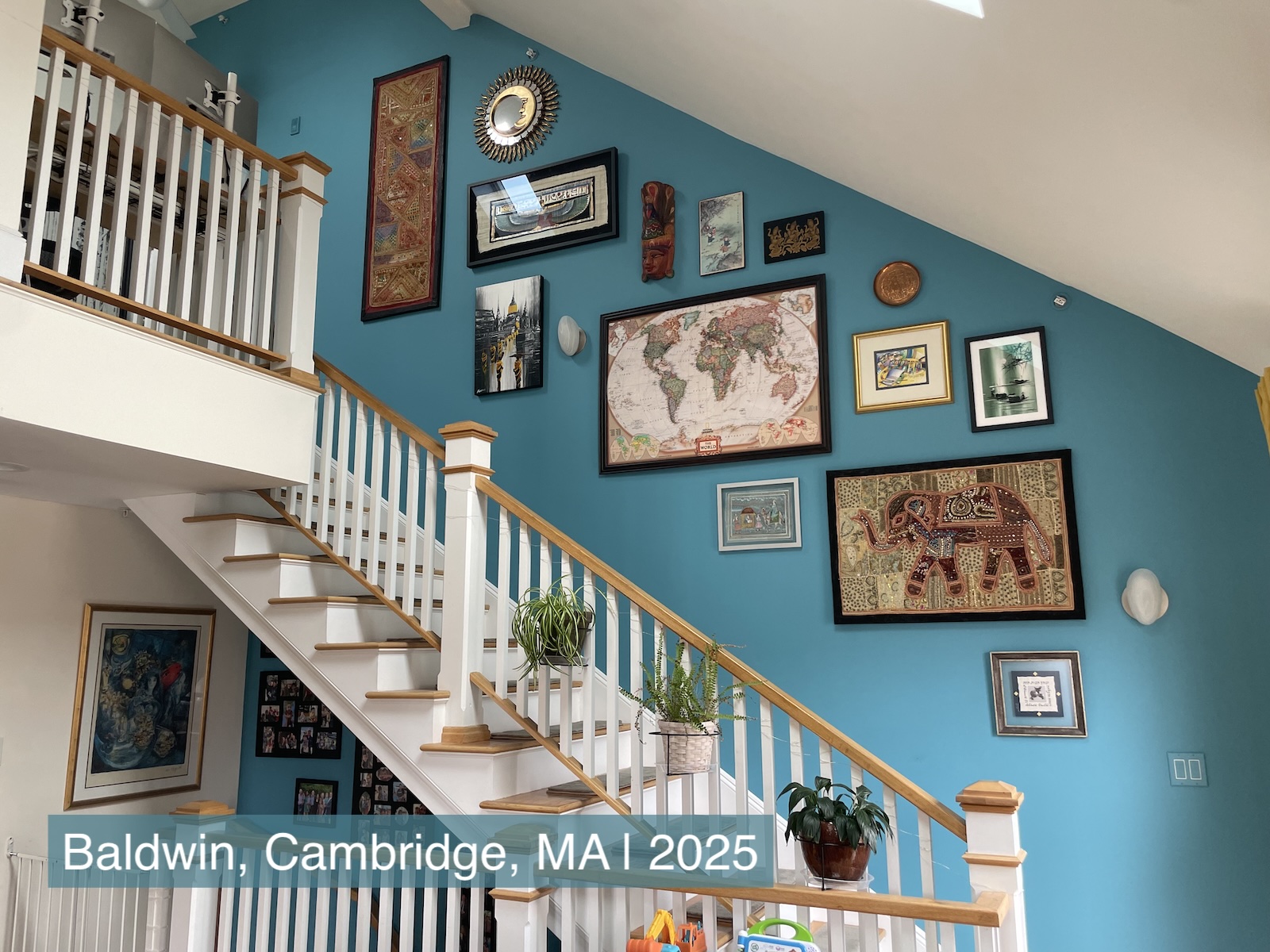
You can see the rest of this room in my living room post.
The Process
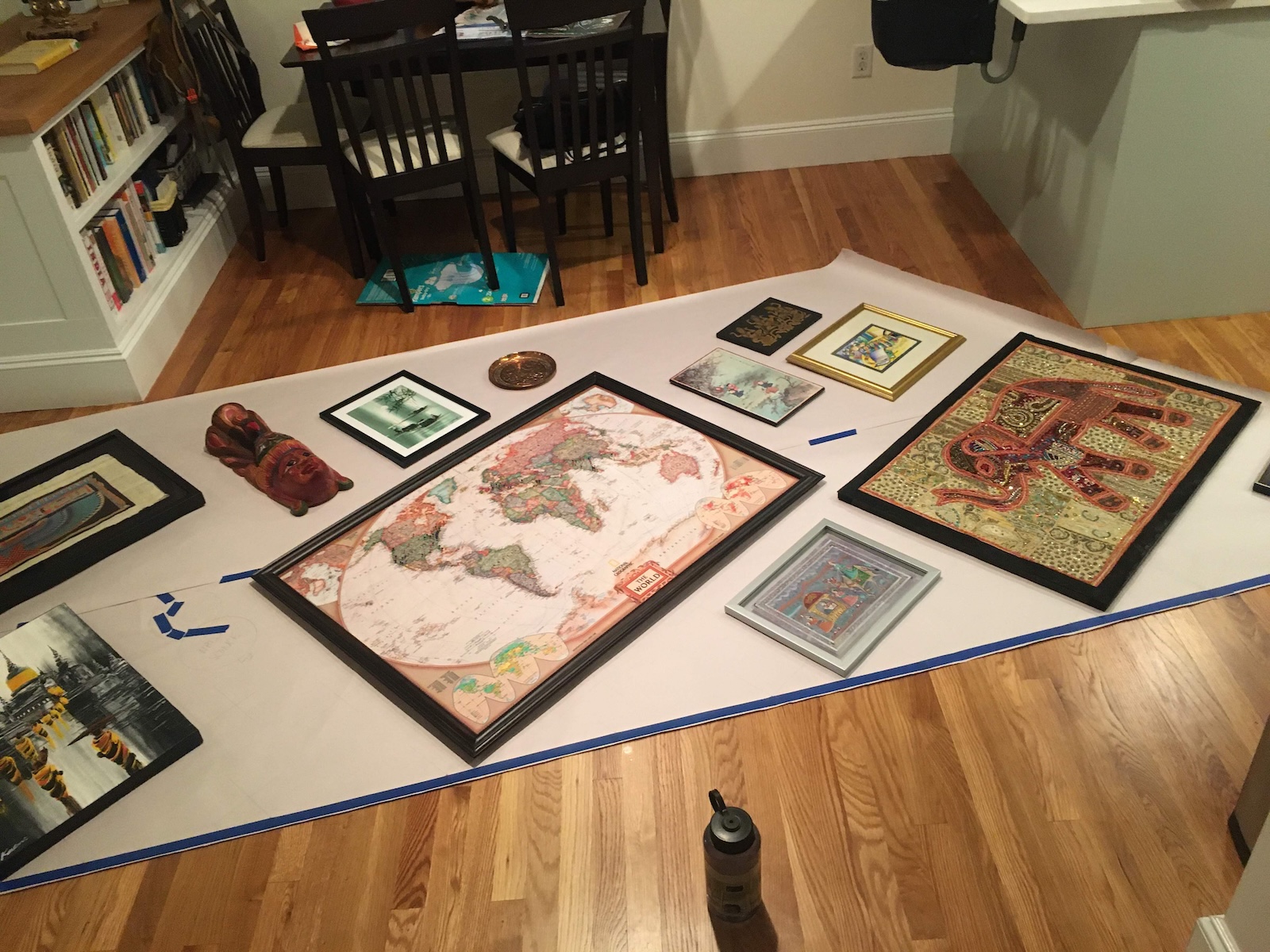
For regular (non-stairwell) walls, I begin by laying out
craft paper on the floor to match
the size of the wall.  Then
I lay the artwork out on top of the paper until the arrangement looks good.
Then
I lay the artwork out on top of the paper until the arrangement looks good.  Next, I trace each piece and mark
with
Next, I trace each piece and mark
with  s exactly where each nail goes.
 I tape the paper onto the wall,
making sure all traced
artwork edges are level. Finally, I put nails in as marked,
pull the craft paper down, and hang the artwork up
with no accidental holes!
I tape the paper onto the wall,
making sure all traced
artwork edges are level. Finally, I put nails in as marked,
pull the craft paper down, and hang the artwork up
with no accidental holes! 

For the stairwell, things were more complicated. I started with taping craft paper onto the
wall.
I tore the paper around the existing wall sconces.  While the paper was up,
I drew level
While the paper was up,
I drew level  s all over the paper randomly, and also measured
40” up from each stair tread to draw a slanted line parallel to the stairs.
s all over the paper randomly, and also measured
40” up from each stair tread to draw a slanted line parallel to the stairs.  Finally, I took the paper down, flattened it on the floor,
then laid artwork out as before.
Finally, I took the paper down, flattened it on the floor,
then laid artwork out as before.
The Stories
I do, in fact, love sentimental items!  Here are the different types of memoribilia that I’ve been able to display on a wall instead of on a surface:
-
souvenirs from international trips
 (and my DIY pinboard map
  )
) -
family heirlooms

-
artwork that we picked out as a couple

-
gifts from friends and family

1. Souvenirs from International Trips
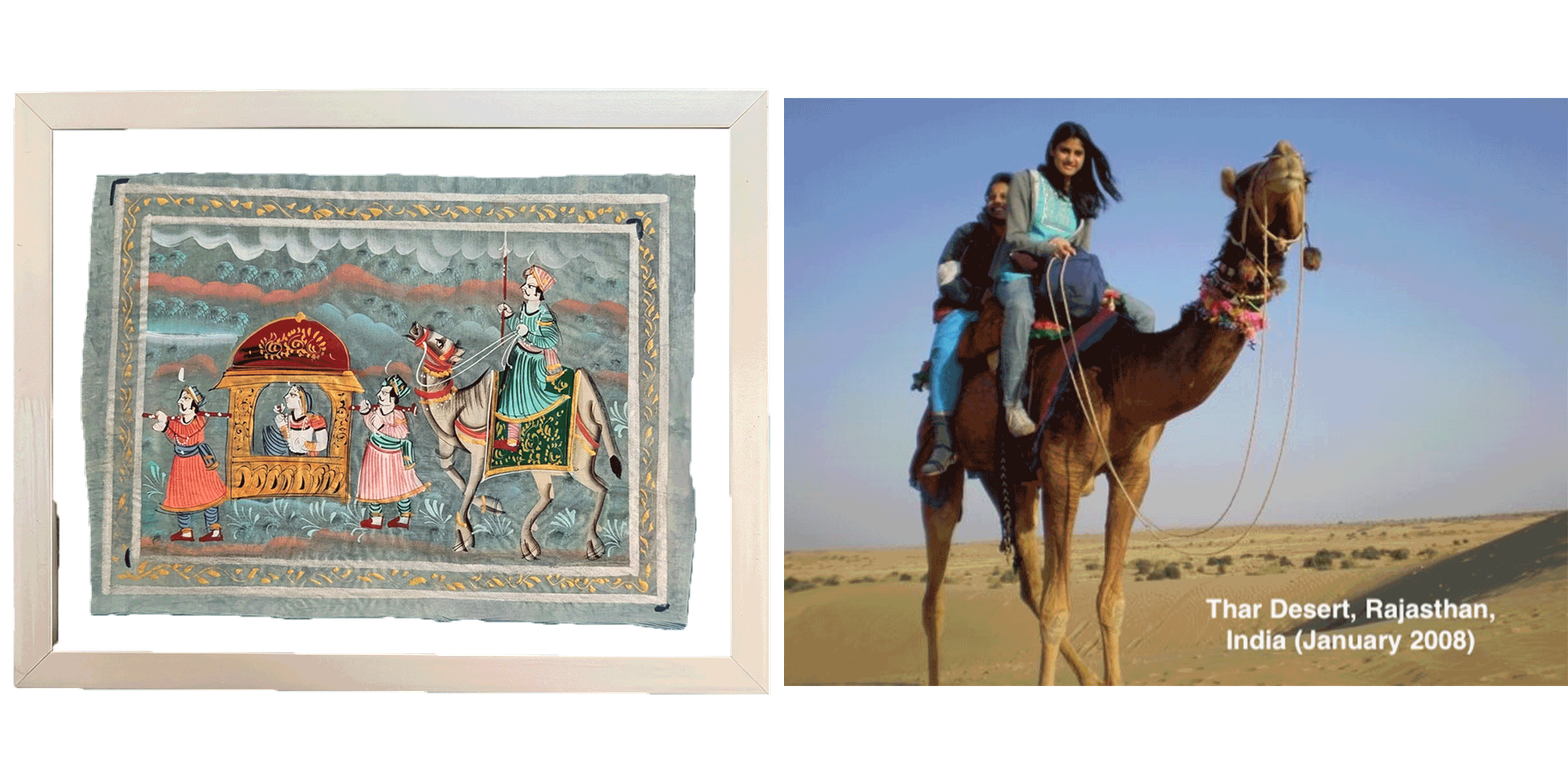 |
Rajasthan, India  January 2008 January 2008Growing up, trips to India mixed family time with travel. On one winter visit, we toured Rajasthan—known for Rajput warriors, vivid textiles, and miniature paintings—and I brought one home. 
|
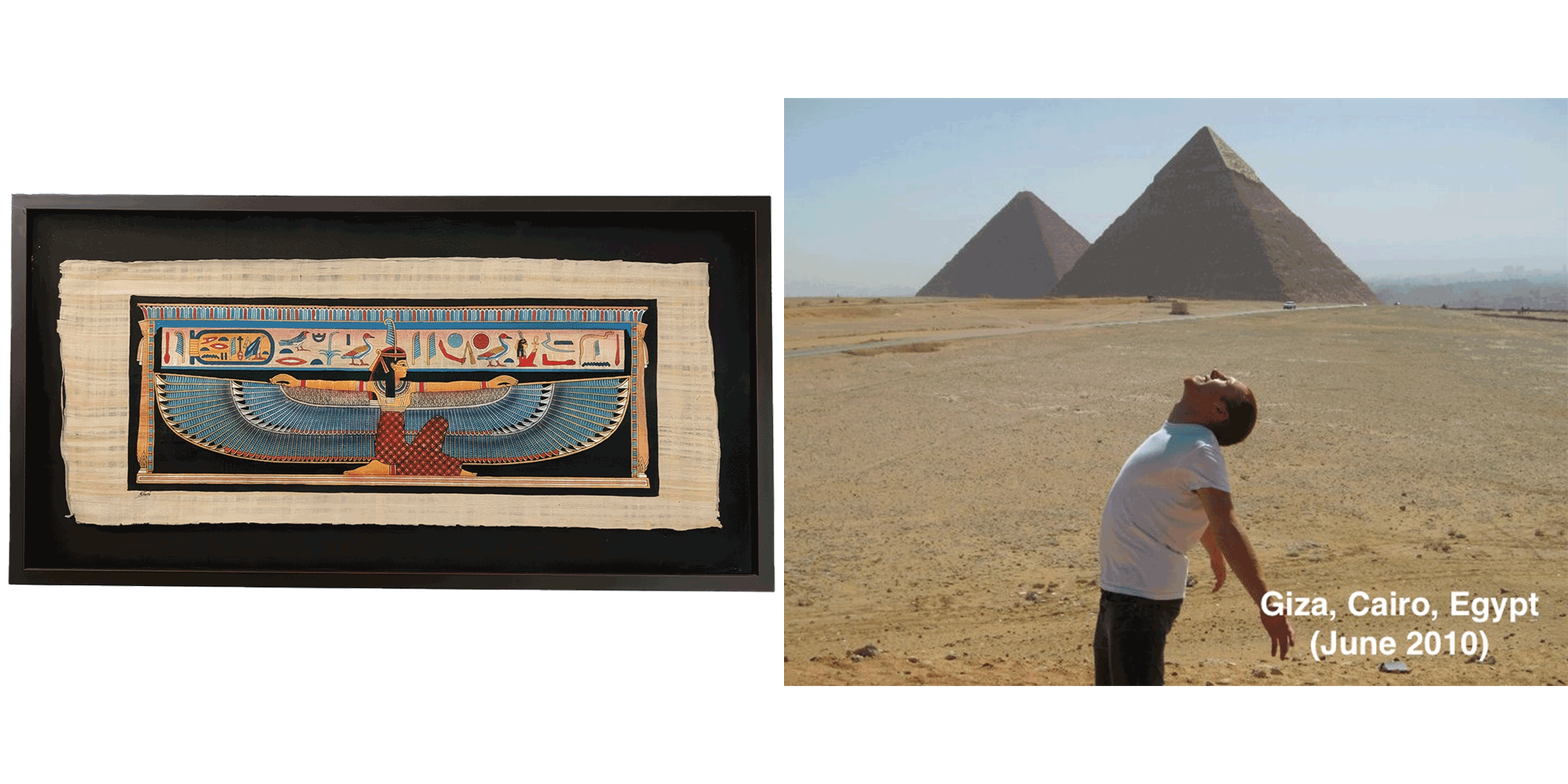 |
Cairo, Egypt  June 2010 June 2010During a Middle East & North Africa backpacking trip, ending in Barcelona for Spain’s first World Cup win!  , my husband Ari bought this papyrus painting of the Egyptian goddess Ma’at. , my husband Ari bought this papyrus painting of the Egyptian goddess Ma’at. |
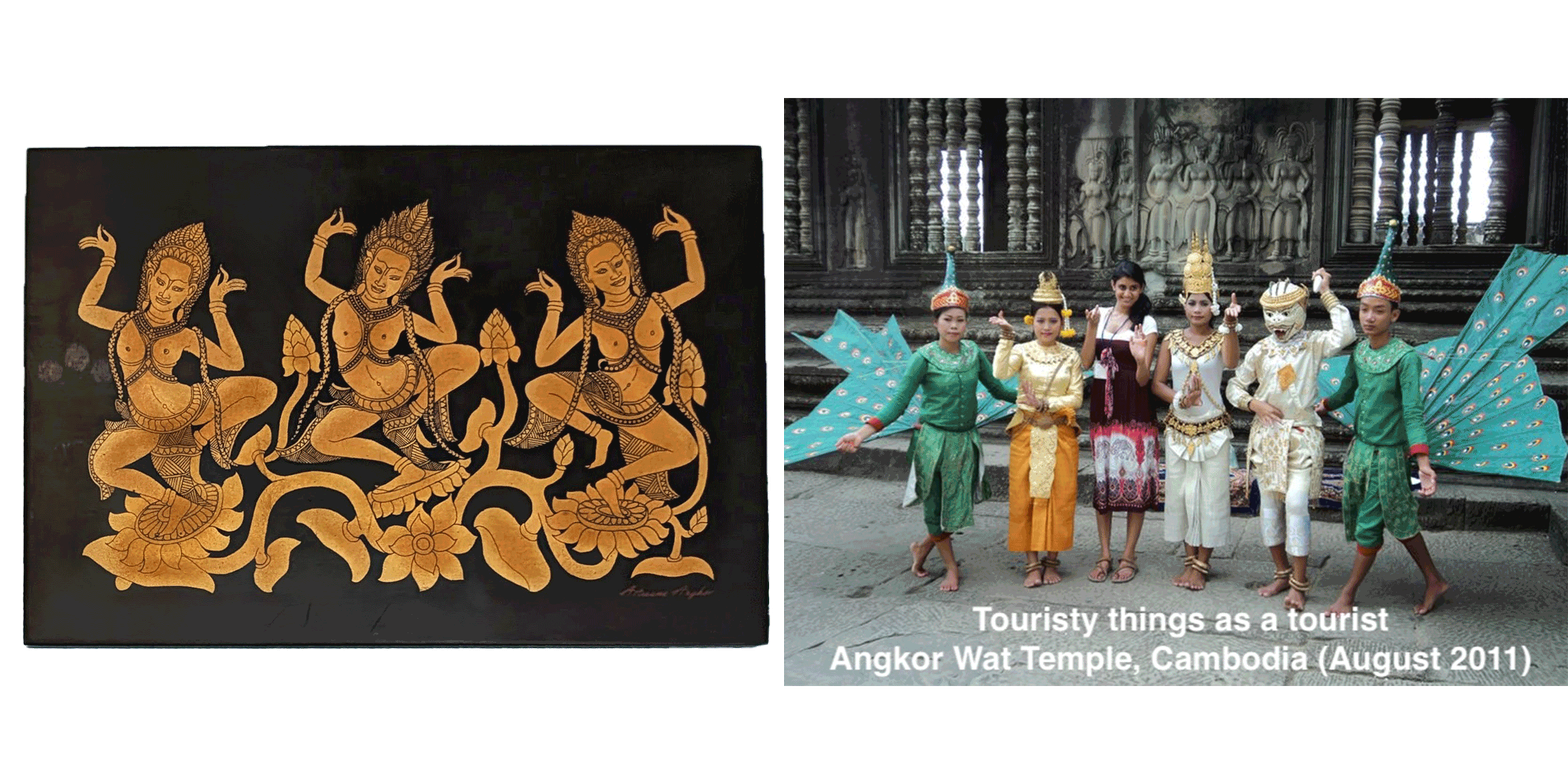 |
Siem Reap, Cambodia  August 2011 August 2011The following summer, I visited the Angor Wat Temple and Ta Prohm (Jungle Temple), both of which were decorated with these apsara (heavenly) dancer carvings. 
|
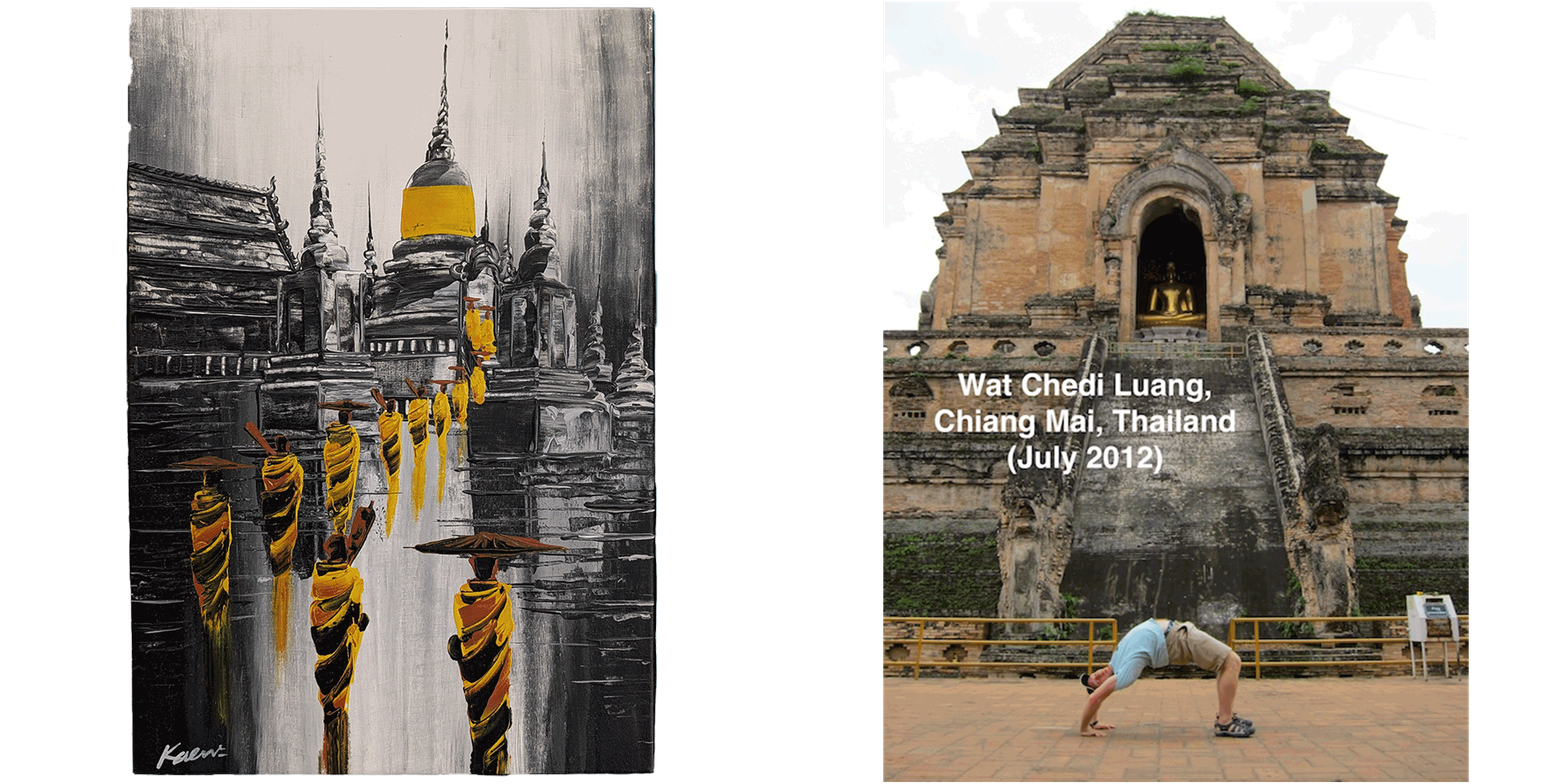 |
Bangkok, Thailand  August 2012 August 2012On another backpacking trip through Southeast Asia, Ari visited Wat Saket (Golden Mount) Temple in Bangkok. He came home with this painting, new motorcycle scars  , a Thai cookbook , a Thai cookbook   , and no regrets. , and no regrets. |
DIY Pinboard Map. Given all our travels, I thought a pushpin world map would be fun.
 I decided to
DIY my own
using my husband’s laminated National Geographic world map
(…ask for forgiveness, not permission!
I decided to
DIY my own
using my husband’s laminated National Geographic world map
(…ask for forgiveness, not permission!  ), a couple
sheets of 1/4” thick corkboard,
mod-podge,
and some trim
and stain.
), a couple
sheets of 1/4” thick corkboard,
mod-podge,
and some trim
and stain. 
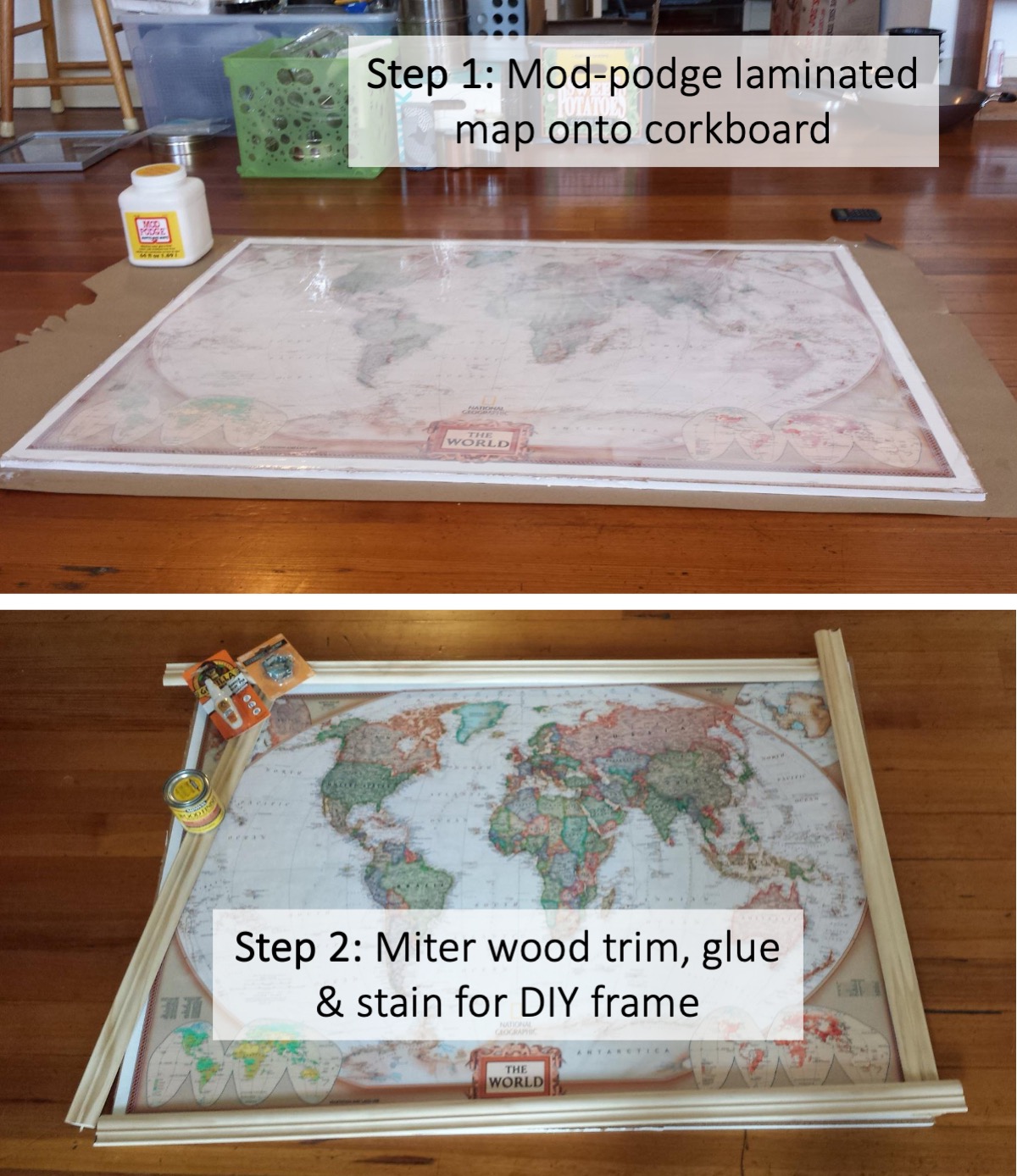
Our pins are colored for my trips  , Ari’s trips
  and trips we’ve taken together
  .
.
2. Extended Family Memories
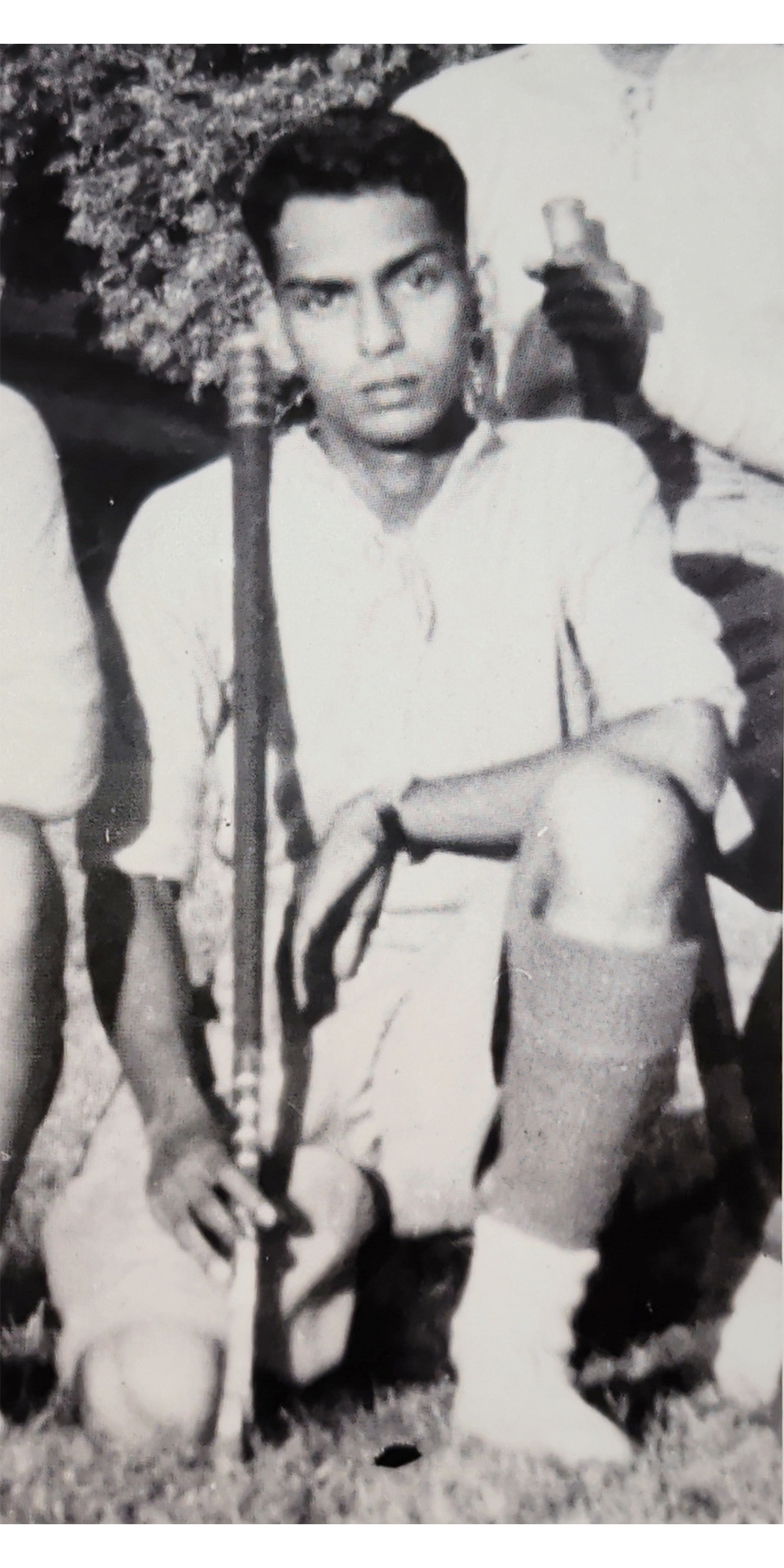
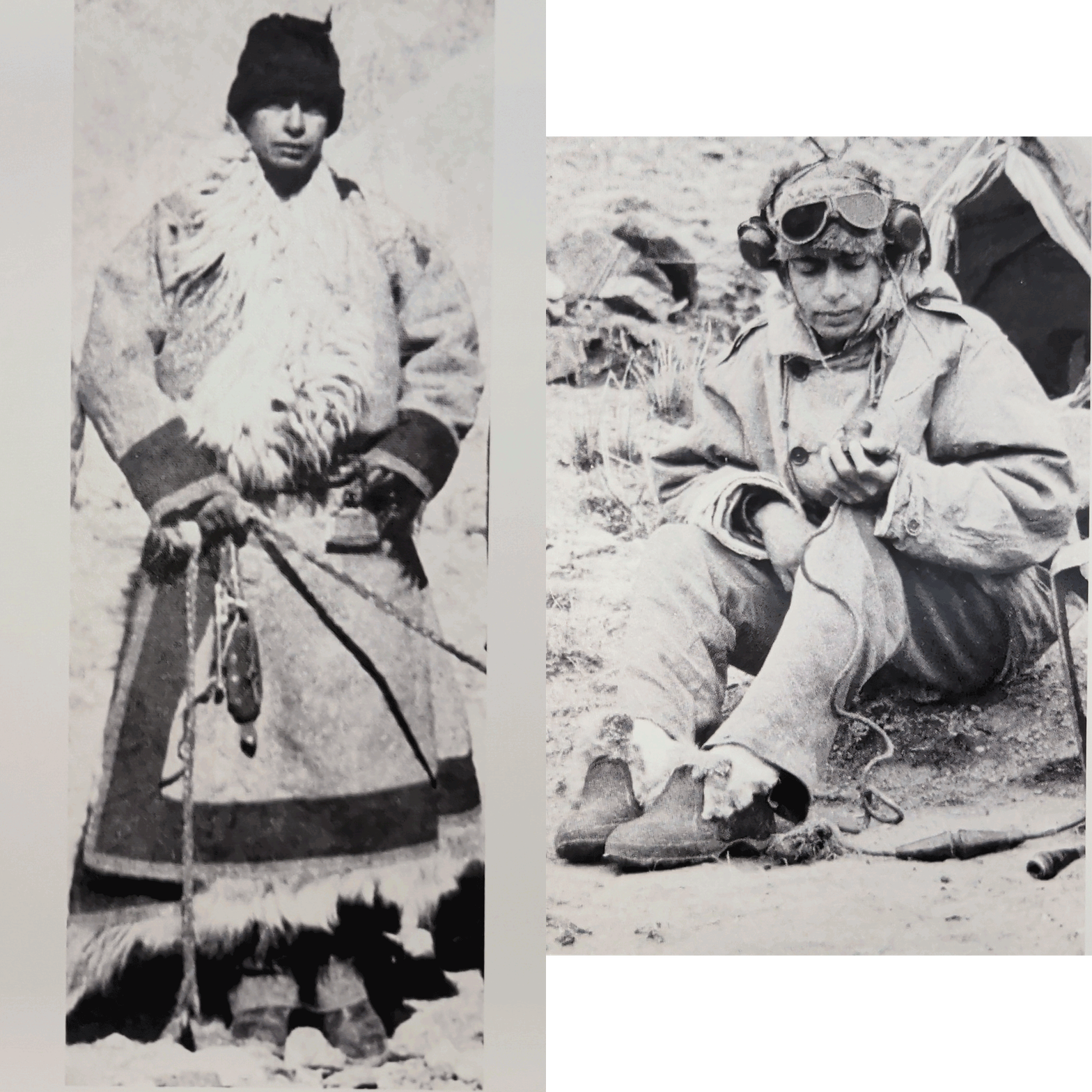
Remembering loved ones. My maternal grandmother’s brother, Nilakantan (Nila Mama, born 1920),
was an endlessly interesting and kind person.
He never had children of his own, which made him a super patient and fun uncle to his
(great-)nieces and (great-)nephews. 

-
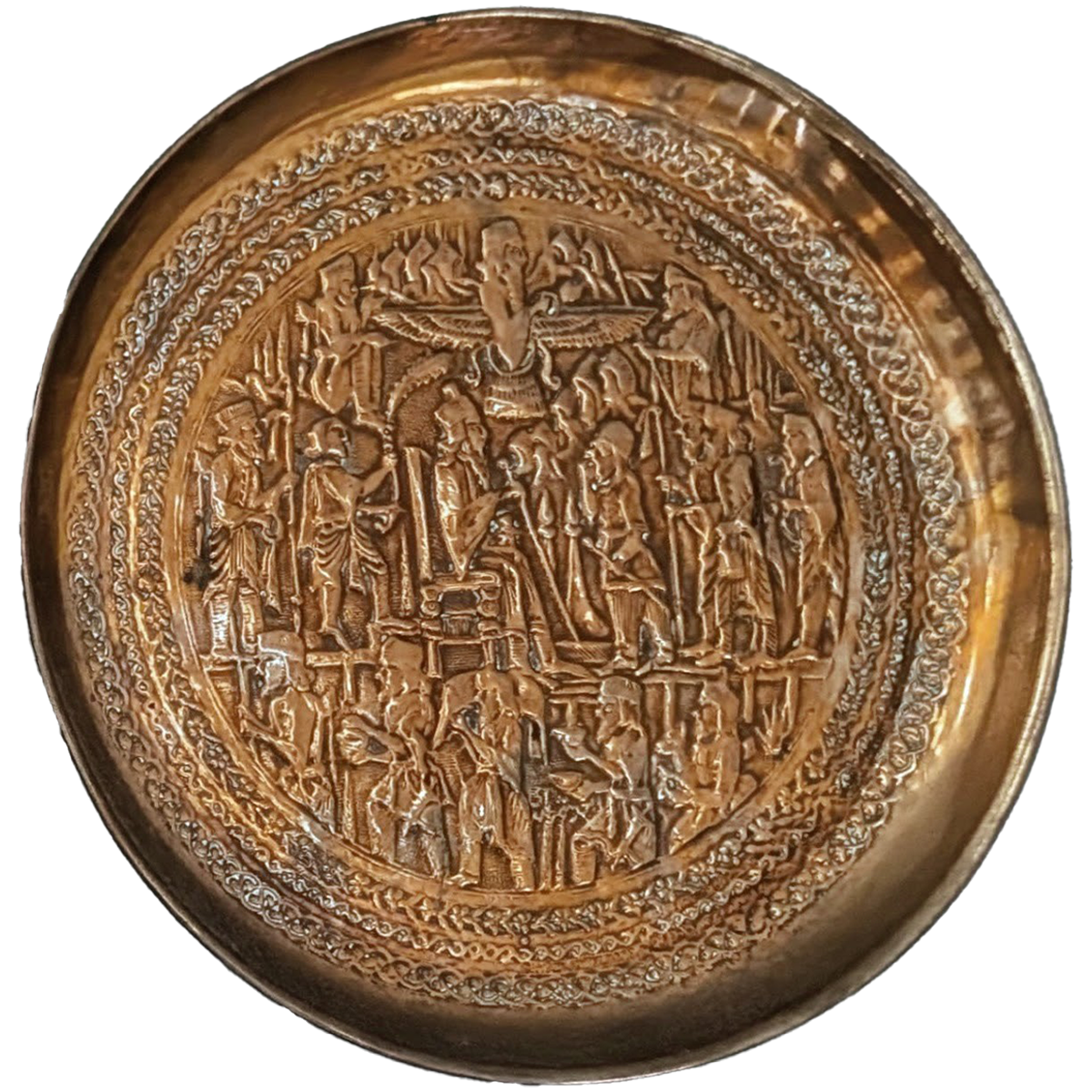
Iran
 ~1940. Nila Mama served in the Indian Army (then part of the British Empire) during and after WW2. At a Red Sea posting, he was brought (despite only being a junior cadet) to a dinner hosted by the Shah of Iran to serve as a translator for his commanding officers. All guests received these custom-engraved brass plates.
-
Nepal
 early 1950s. Nila Mama was stationed in Ladakh, a northern border region of newly-independent India. This painting was purchased during a weekend trip to neighboring Nepal.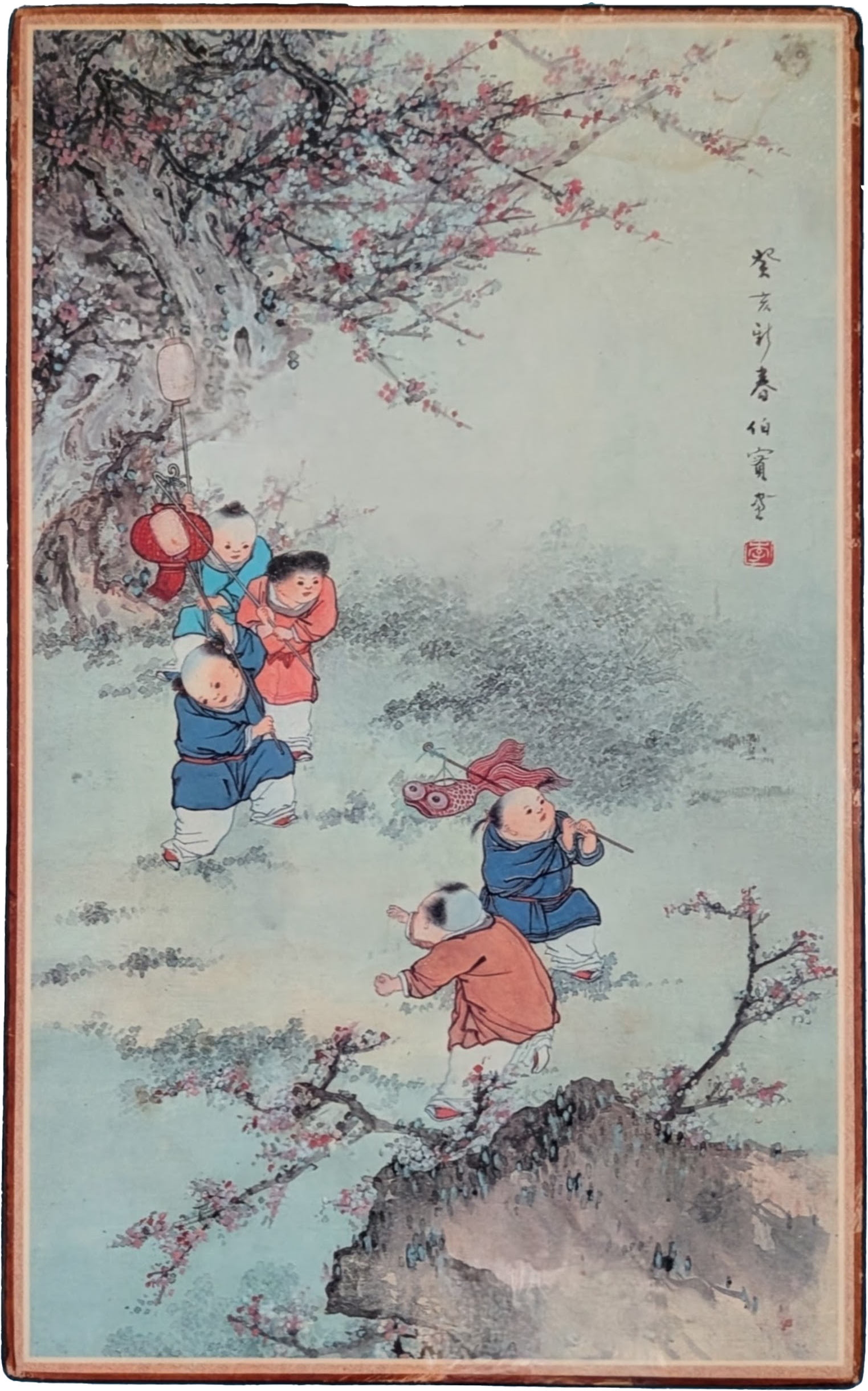
Family pictures. Family pictures are essential for personalizing a home, but displaying them in tabletop frames can be a slippery slope toward clutter…  I display family photos in our entryway stairwell, and I also hung up pictures of our
extended family and ancestors in our hallway:
I display family photos in our entryway stairwell, and I also hung up pictures of our
extended family and ancestors in our hallway:
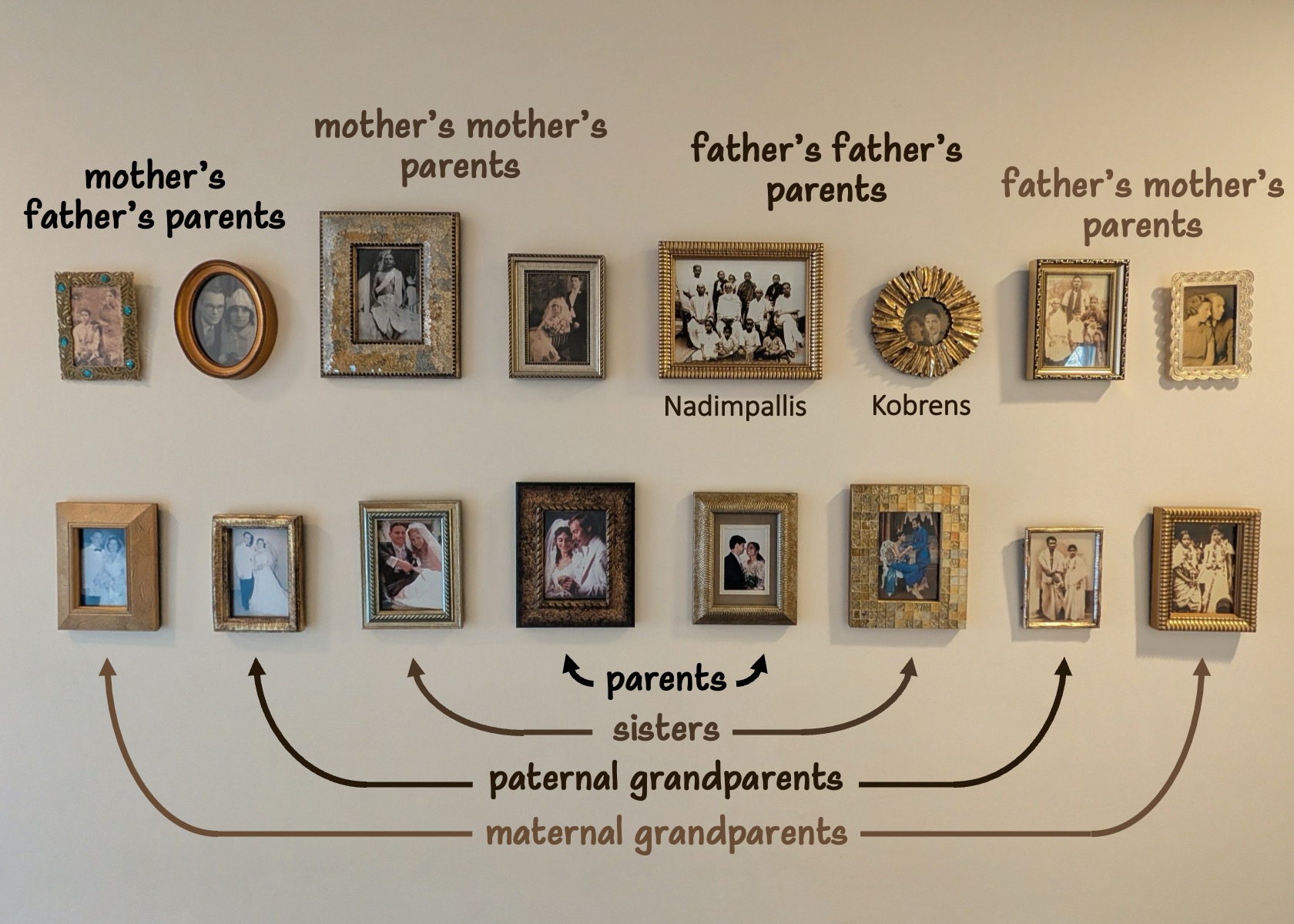 These were originally displayed at our wedding. Afterward, I removed the frame stands and attached picture wire with D-ring hooks so we could hang them on the wall.
3. Mutually Agreeable Artwork
Buying art for your home happens slowly  . One of the underrated perks of our 30s (/a decade into marriage)
has been getting to choose art together , not out of urgency to fill walls, but out of shared,
co-evolving taste and shared history.
. One of the underrated perks of our 30s (/a decade into marriage)
has been getting to choose art together , not out of urgency to fill walls, but out of shared,
co-evolving taste and shared history.
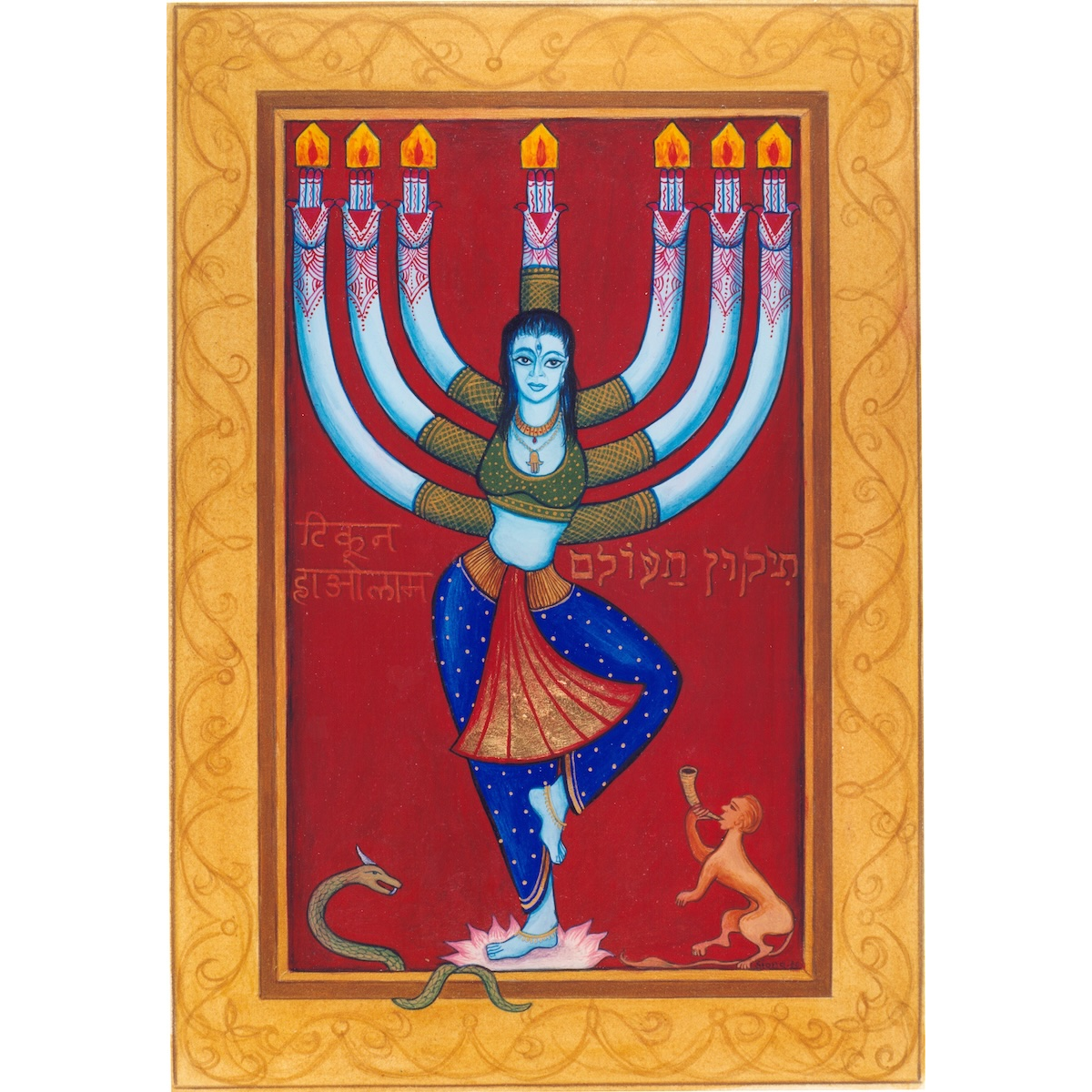 |
Siona Benjamin Print  2025 2025We finally bought Finding Home #46: Tikkun ha-Olam for our 10th anniversary after eyeing it since 2013. It feels like a reflection of how we choose to live: blending our cultures in a way that never feels like a compromise. |
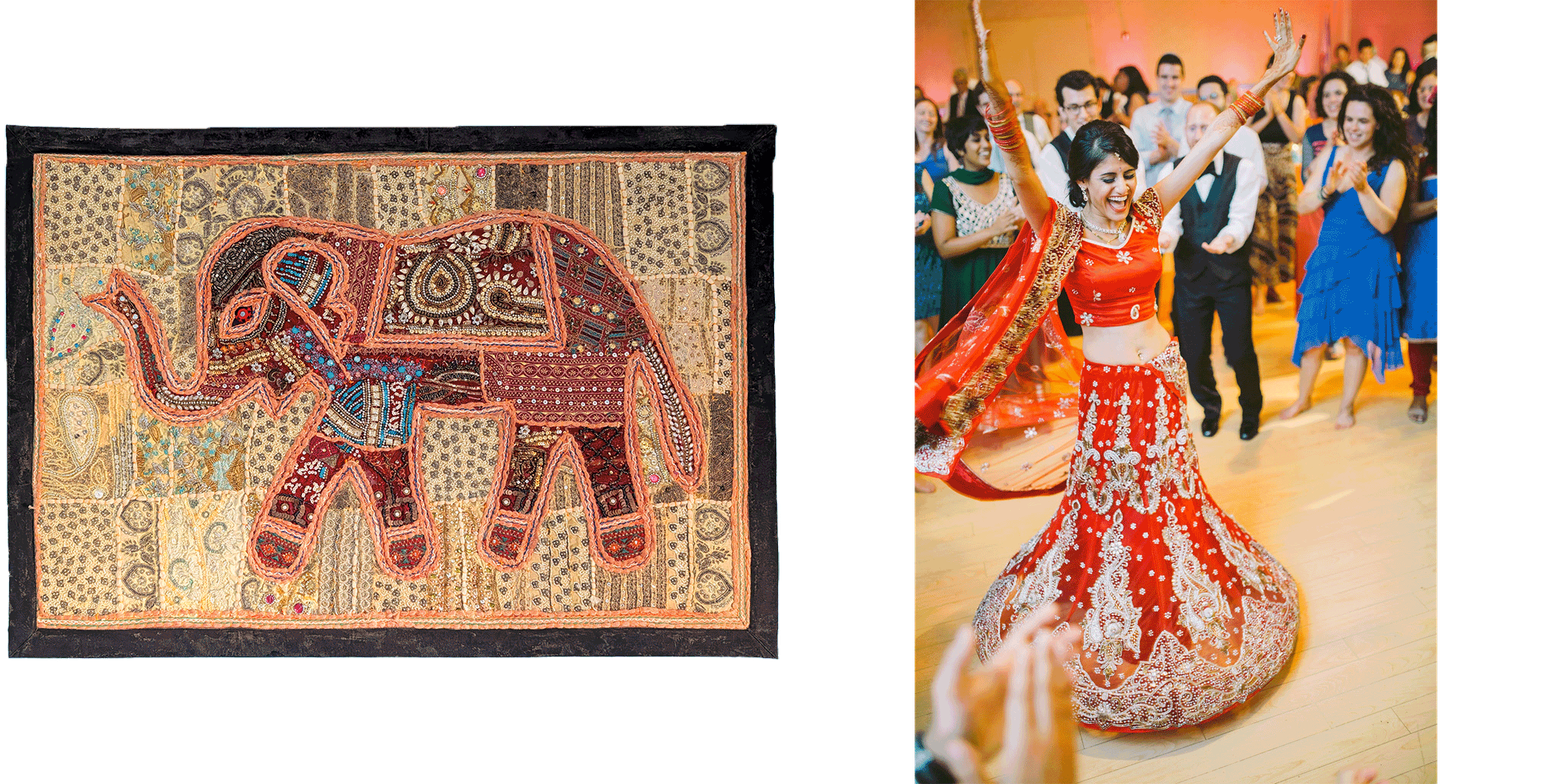 |
Elephant Tapestry 2014 We bought this in Bengaluru on our first trip to India together, at the same shop where I bought my wedding lehenga. PSA: Treating wall tapestries with fabric UV protector can help prevent fading! |
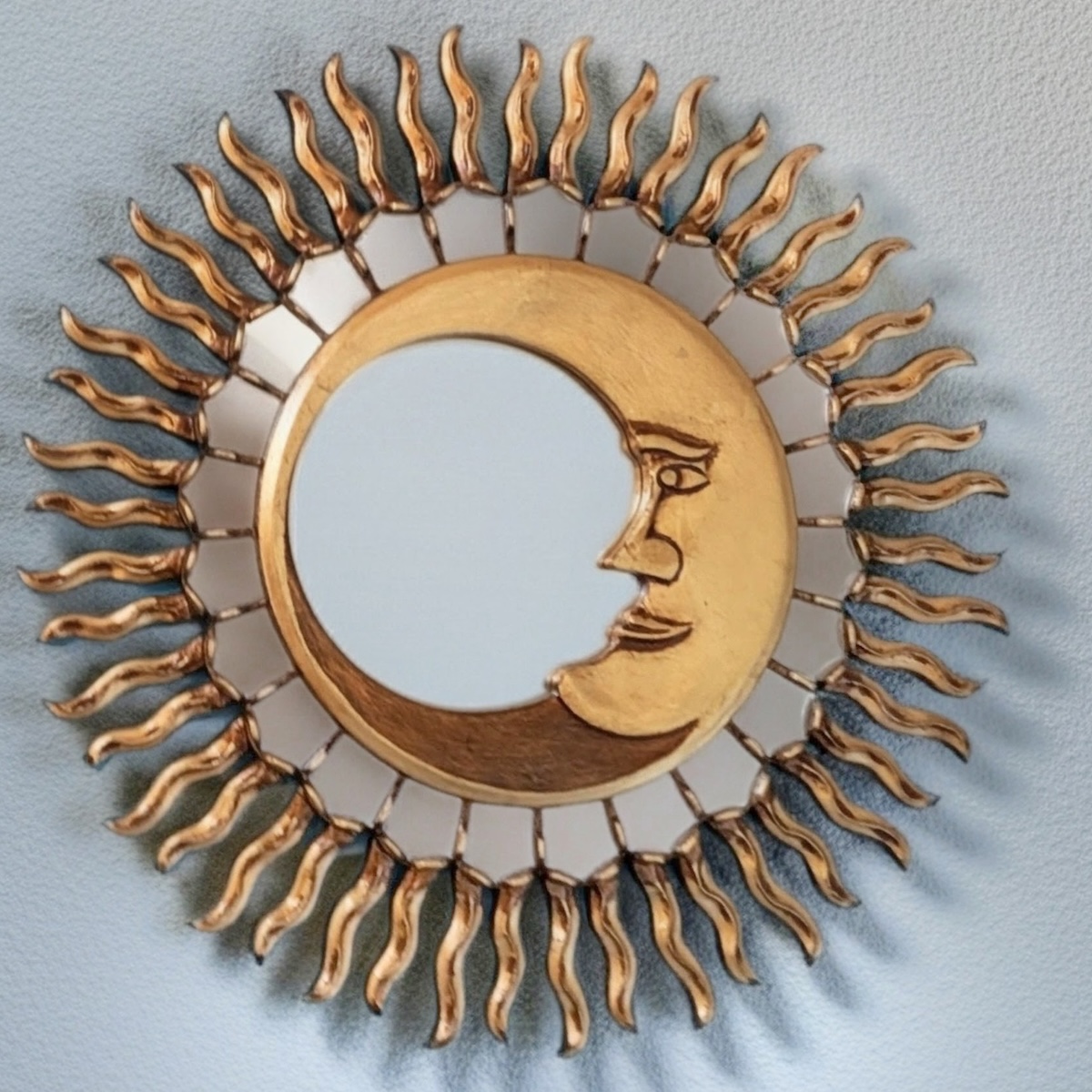 |
Peruvian Sun/Moon Mirror  2019 2019When my sister got married, we chose this piece to mark our growing family and as inspiration to visit my brother-in-law’s home country. |
4. Gifts from Family & Friends
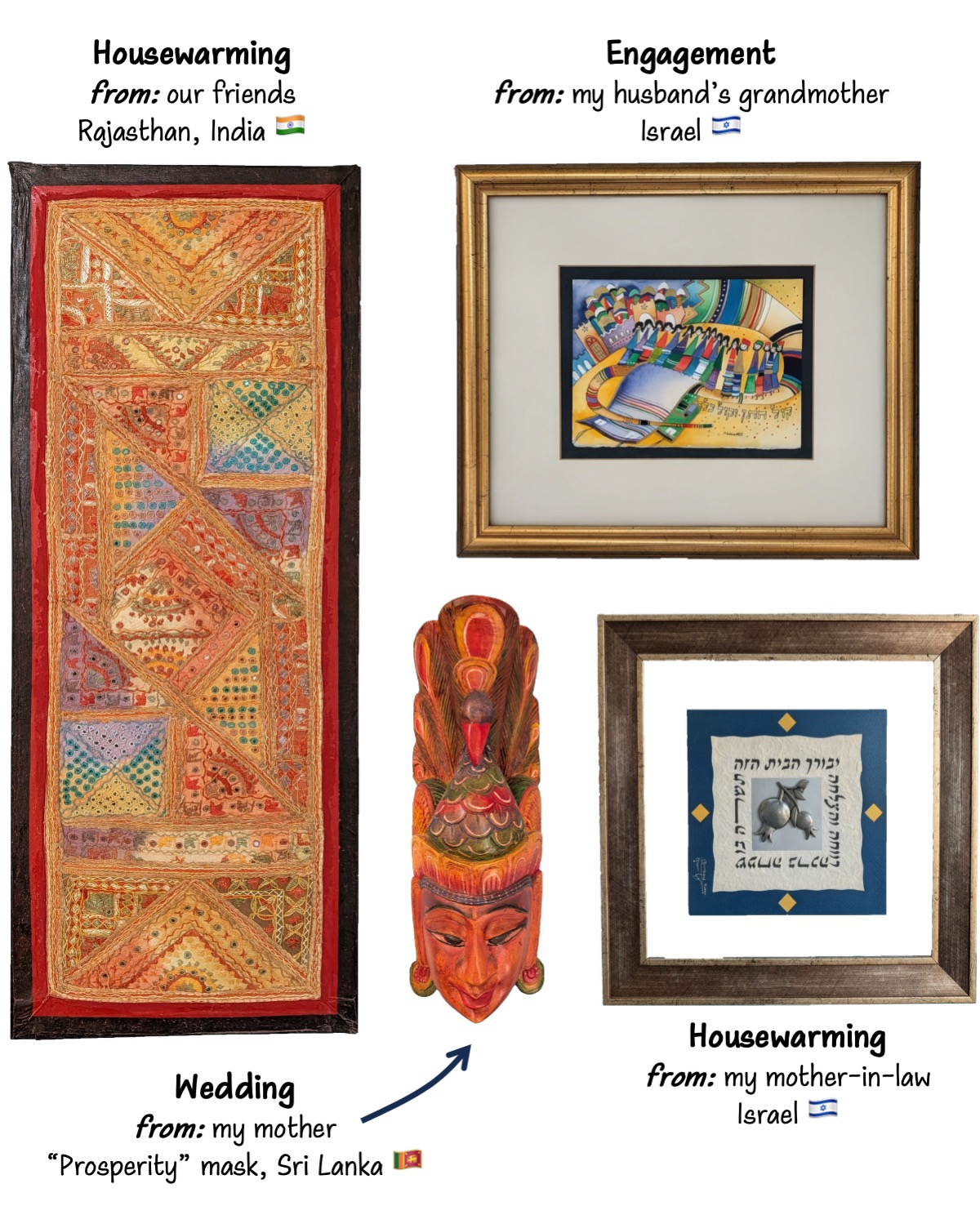
Buying any art for someone else is risky!! It can (and should!) be a personal choice. That said, we’ve
been lucky to receive a few keepers from family and friends that we genuinely love.
Here it is, all together, one last time:
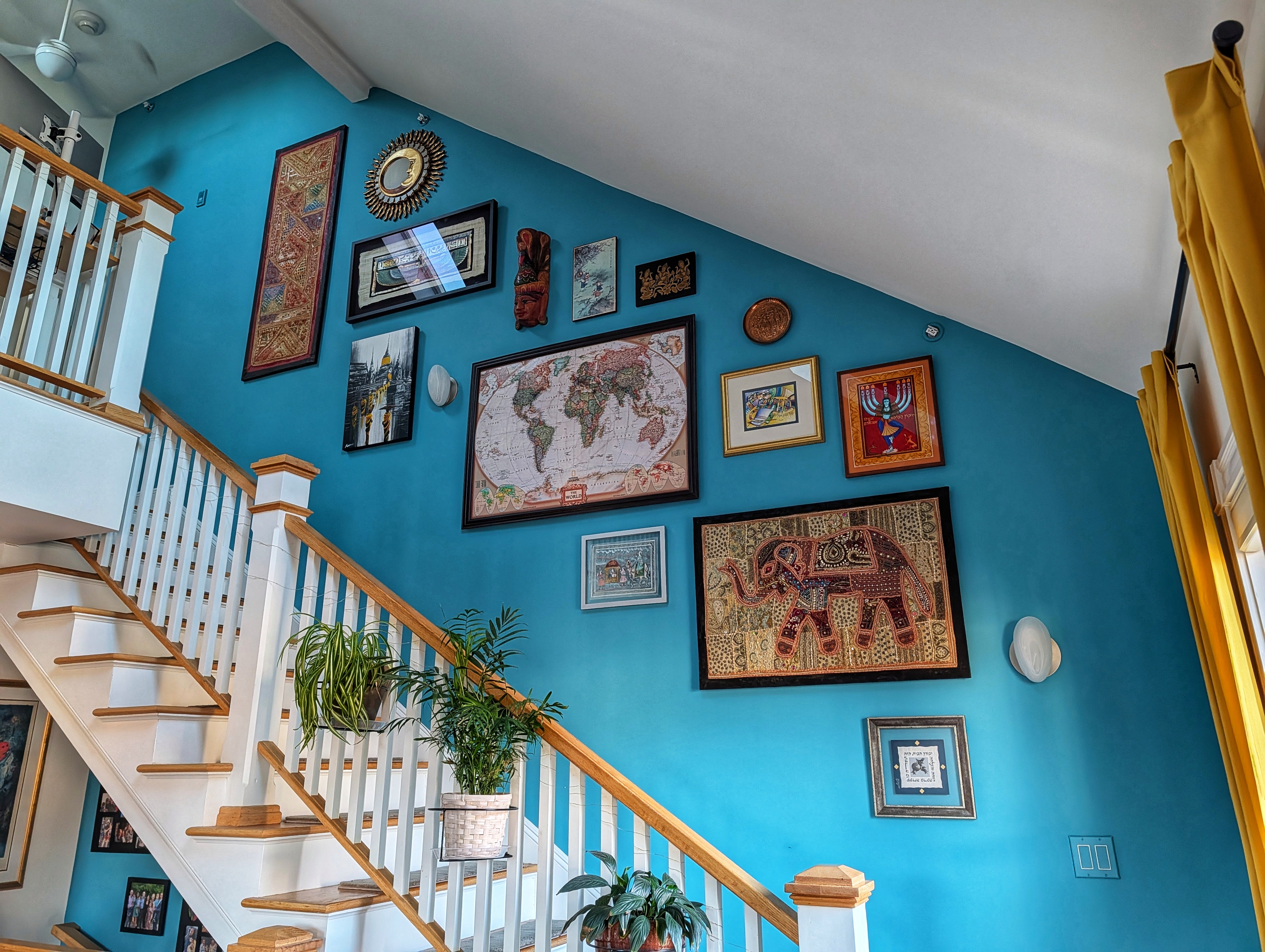
If you’re trying to balance displaying sentimental pieces with practicality and/or constrained space,
you might consider a gallery wall, which has worked well for us! 
You can check out the other side of the living room, too, which I redid as part of our Big Move of 2025!

Shilpa Kobren is the Associate Director of Rare Disease Analysis at Harvard Medical School where she focuses on analyzing genomic sequencing data with patient clinical information to derive insights into human diseases. Shilpa lives in an 1890s urban apartment in Cambridge, Massachusetts with her husband and two energetic toddlers. She retains her sense of peace amid the chaos by creating and iteratively improving systems that optimize daily efficiency in her family's constrained living space.